ASSIGNMENT TWO: WRITTEN REFLECTION–Section One-
The Essential Writing Life Chapters 1-3
Briefly reflect on the following comments written below from
Chapters 1-3 and any additional thoughts that you have after reading these
chapters.
Chapter 1: Simplify the Teaching of Writing• Simplify our
teaching
• Becoming more knowledgeable about teaching
writing
• Examine your beliefs
Regie gets to the heart of her book Writing Essentials
with this quote on the final page of Chapter One: “By reducing the clutter in
our teaching lives-the over-planning, the unnecessary activities, the paper
load, all the ‘stuff’ that takes our time and energy and does little to improve
teaching and learning-we bring joy back into our work and the world of our
students.” Many of us work very hard and spend many hours complicating our
teaching lives. In this book Regie will help you simplify your teaching life for
your benefit and that of your students.
One of the frustrations that teachers encounter regularly
is the ever changing “latest and best” writing programs that districts or states
force on them and their students. With this revolving cycle of programs,
teachers are spending too much time learning how to use the program rather than
becoming better writing teachers. Regie explains that in the districts where
students are the best writers, they are writing for real purposes and audiences
and publishing their writing; teachers are not using prescribed writing
programs.
Look at Appendix A (page A-2.) Examine your beliefs about
writing by reading the statements about the writing process and marking true or
false in your book. (Go ahead and write in your book, it’s OK! You can even use
a pencil and mark very lightly if you want to.) We found this activity very
enlightening. Let us know what you think after you complete the
activity.
In your reflection for Section One, please include your
thoughts about the following questions or statements:
• Regie demonstrates how to use the Optimal Learning
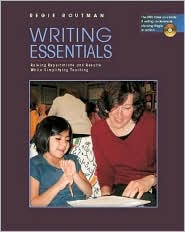
Model (shown on the front cover and page 11) throughout the book. Consider how
the Optimal Learning Model fits into your own instruction.
• As you think about how to teach writing so that all
students can become successful, effective and joyful writers, reflect on how you
presently teach the “12 Writing Essentials” (as described on pages 13-14 in the
text) during your daily writing instruction. As we continue to read through
Regie’s book, hopefully you will begin to see how you might make changes in your
instruction to better incorporate these “12 Writing Essentials.”
Chapter 2: Start With Celebration
• Make sure writing is meaningful not just
correct
• Use stories as springboards and ensure that ALL
students hear stories
• Write in front of your students and connect home and
school
The title of Chapter Two simply states, “Start with
Celebration,” and that’s exactly what we need to do for our students. The
celebration of all students’ writing needs to be put into the forefront and be
made our first teaching goal. Celebrations should happen school-wide, within our
classrooms and with students individually. As children begin to see themselves
as successful writers, they will take more risks in their writing and in turn
will become better writers who enjoy the writing process.
Another key point that Regie highlights in this chapter
is to “make sure writing is meaningful, not just correct!” Students need to
understand that writing is “enjoyable and for a real purpose and audience.” She
also reminds us “that teaching skills in isolation does not make student
writers; neither does teaching to the test. And breaking writing into bits and
pieces robs children of the joy of writing.”
Regie suggests using stories as a springboard for
teaching and learning. Hearing and telling stories builds our students’ oral
language skills and these stories are “an entryway into reading and writing.”
Only when students are reading and writing real stories can they connect the
“skills” based learning to their reading and writing!
Please include your thoughts about the
following questions or statements in your written reflection of Section
One:
• Regie explains how important celebrating student
writing is. How do you celebrate student writing in your classroom? How might
you add more celebration of student writing to your day/year?
• Consider what changes you could make in your writing
instruction to make writing more meaningful and purposeful for your
students.
Wednesday, June 27, 2012

Sunday, June 24, 2012
Assignment One: Introduction Post
Welcome
to Essentials of Writing! We look forward to working and learning with
you. In order for everyone to get the most out of the course, please be
sure to read and respond to each others comments. Please try to keep
your responses within one allotted "comment" space to ensure that the
blog remains manageable for all participants.
Also, you may want to type your comments in a Word Document and either copy from Word and paste onto the blog or save it in a folder on your computer and then post it to the blog. I have written a couple of lengthy comments that I lost before I was able to post it to the blog. This extra step may save you some frustration later on this term.
Last of all, we will write our comments to your posts on the blog, so you will need to check back to the corresponding week for feedback (and to make additional comments if you wish.)
Let us know if you have any questions. You can email us, but please put the words "Question for Essentials of Writing" in the subject line so that we can respond in a timely fashion.
ASSIGNMENT ONE: Post your Introduction to the course Blog.
Introduction Post- Tell us about yourself. Where do you teach? What grade do you teach? How long have you been teaching? How many students are there in your class? Do you have instructional support? What does your current literacy program look like? (If you aren’t currently teaching let us know.) What is your knowledge/training in the area of literacy (be specific about your experiences teaching writing?) Does your district provide training in literacy –especially writing? If so, what exactly have they offered? Has your district been bogged down with getting students to perform well on state writing assessments – prompts? How do you feel about teaching? Are you happy at work? Also, let us know a little about you outside of the classroom: Interests/ Hobbies/Family Life? What do you hope to get out of this course? Post your reflection to the blog.
Also, you may want to type your comments in a Word Document and either copy from Word and paste onto the blog or save it in a folder on your computer and then post it to the blog. I have written a couple of lengthy comments that I lost before I was able to post it to the blog. This extra step may save you some frustration later on this term.
Last of all, we will write our comments to your posts on the blog, so you will need to check back to the corresponding week for feedback (and to make additional comments if you wish.)
Let us know if you have any questions. You can email us, but please put the words "Question for Essentials of Writing" in the subject line so that we can respond in a timely fashion.
ASSIGNMENT ONE: Post your Introduction to the course Blog.
Introduction Post- Tell us about yourself. Where do you teach? What grade do you teach? How long have you been teaching? How many students are there in your class? Do you have instructional support? What does your current literacy program look like? (If you aren’t currently teaching let us know.) What is your knowledge/training in the area of literacy (be specific about your experiences teaching writing?) Does your district provide training in literacy –especially writing? If so, what exactly have they offered? Has your district been bogged down with getting students to perform well on state writing assessments – prompts? How do you feel about teaching? Are you happy at work? Also, let us know a little about you outside of the classroom: Interests/ Hobbies/Family Life? What do you hope to get out of this course? Post your reflection to the blog.
Thursday, May 17, 2012
Assignment Nine: Final Course Reflection
Assignment Nine: Final Course Reflection
(All assignments are due by 6/11 !!!)
Take a look at the last section in Regie's text, Writing Essentials, it's chock full of great resources!!!
Teaching in Action: Lesson Essentials 5 Day Lesson Plans & Appendices
• Secrets of Second Graders• Heart Poems
• Procedural writing• Hero writing
• Persuasive writing
• Appendix survey
Be sure to look through this section. If you haven’t already done so, look at Appendix A (page A-2.) Re-examine your beliefs about writing by re-reading the statements about the writing process and marking true or false in your book. Did you change any of your previous answers? Would you consider bringing this page to your team or even to your entire school to jump-start discussions about writing? Take some time to look through the appendices. There are several useful examples included. One we’d like to point out to you is Appendix L- The Genre Characteristics Excerpt on page A-13. Look to the Writing Essentials companion website at www.heinemann.com/writingessentials for the entire chart as well as directions to assist you playing the DVD.
ASSIGNMENT NINE: Final Course Reflection - Critically examine your current literacy program and develop realistic goals to improve your instruction. Also reflect on the balance between your home and school life. If our students are to become happy, literate people, they need happy, balanced teachers. BRIEFLY, share several of your goals with the class by posting them to the blog for this final assignment.
Thanks for taking our course!!!! Mary & Jackie!
(All assignments are due by 6/11 !!!)
Take a look at the last section in Regie's text, Writing Essentials, it's chock full of great resources!!!
Teaching in Action: Lesson Essentials 5 Day Lesson Plans & Appendices
• Secrets of Second Graders• Heart Poems
• Procedural writing• Hero writing
• Persuasive writing
• Appendix survey
Be sure to look through this section. If you haven’t already done so, look at Appendix A (page A-2.) Re-examine your beliefs about writing by re-reading the statements about the writing process and marking true or false in your book. Did you change any of your previous answers? Would you consider bringing this page to your team or even to your entire school to jump-start discussions about writing? Take some time to look through the appendices. There are several useful examples included. One we’d like to point out to you is Appendix L- The Genre Characteristics Excerpt on page A-13. Look to the Writing Essentials companion website at www.heinemann.com/writingessentials for the entire chart as well as directions to assist you playing the DVD.
ASSIGNMENT NINE: Final Course Reflection - Critically examine your current literacy program and develop realistic goals to improve your instruction. Also reflect on the balance between your home and school life. If our students are to become happy, literate people, they need happy, balanced teachers. BRIEFLY, share several of your goals with the class by posting them to the blog for this final assignment.
Thanks for taking our course!!!! Mary & Jackie!
Sunday, May 6, 2012
Assignment Eight: Section 4 & 5 Reflection
Note: These section are packed!!! Pick and choose your discussion points so that the blog doesn't become overwhelming and packed with so much information that participants won't want to read each others' comments. :)
Sections Four and Five- Advocacy Is Also Essential and Teaching In Action: Lesson Essentials
Assignment Eight: Read Writing Essentials Chapters 11-12 and Section Five. Reflect on the comments below and any additional reactions you have after reading these chapters. Post your thoughts to the course blog.
Assignment Eight: Read Writing Essentials Chapters 11-12 and Section Five. Reflect on the comments below and any additional reactions you have after reading these chapters. Post your thoughts to the course blog.
Chapter 11: Build on Best Practice and Research • What are some of the key research findings most relevant to writing instruction?
• What are the practices of highly effective teachers?
• How can you be part of the ongoing professional development discussions in your building?
• What about test scores? What are the characteristics of high performing schools?
• Think twice before adopting a “program”
Regie begins this chapter sharing her experiences doing residencies in schools and the surprising (and delightful) discovery that whole school cultures changed during the course of their work improving literacy instruction. As she said, “This is what education should be about…whole schools working together so that all students (can) succeed.” How is the climate/culture in your school? On your team? One reason we continue to look to Regie for inspiration is that we feel she is so practical. There is not one right way or method to teach writing. “That is why formulas, programs and recipes don’t work. Every context, school and person is different and has different needs. Literacy is not a set of acquired or learned skills.”
Chapter 12: Make Every Minute Count• You need to “REDUCE THE PAPER LOAD!!!”
• What can we do that will save us time and allow us to focus more on meaningful instruction?
• Regie states, “Take more time to see the light!” Don’t get bogged down with daily worksheets and isolated exercises.
Though this chapter is short it is full of valuable ideas and reminders! Regie reminds us in this chapter to stop and reflect about what we are doing in the classroom. Ask yourself: Is this the best use of my time? Is what I’m about to do going to help my students become more joyful and accomplished readers, writers and thinkers?
“It might be that the best use of your time is to read a professional book, see a movie, visit with a friend. Sharing your experiences with your students may be a more useful way to get them to think about their writing than marks and comments on a paper.” “It’s hard to come to school all excited about teaching if you’ve spent hours the night before pouring over papers.” It is a disservice to our students and ourselves “if our out-of-school time is all about paperwork.” In fact, “Teachers’ comments on students’ papers do little to improve writing, even if the comments are positive ones. It is far more effective to conference with students and focus on specific writing issues with the student at your side.”
Also “(b)e sure that most of your writing time is devoted to writing, not preparing for writing or doing activities about writing. Safeguard sustained writing time; it’s critical for becoming a writer. Limit take-home work for students too, and place more emphasis on free-choice reading. Having more reading experiences positively impacts growth in writing skills.”
Regie closes this chapter by reminding us to breathe, relax and enjoy writing- and your life! “One way to reduce stress and have more energy for teaching and advocacy is to have a life outside of school. I worry about teachers and principals who work twelve-hour days. I have seen no research that shows educators who work the longest hours get the best results or that longer reading and writing projects teach more about reading and writing. Keep evaluating whether what you’re staying late for-or the hours of work you take home- will help your students become more effective readers and writers.”
• What are the practices of highly effective teachers?
• How can you be part of the ongoing professional development discussions in your building?
• What about test scores? What are the characteristics of high performing schools?
• Think twice before adopting a “program”
Regie begins this chapter sharing her experiences doing residencies in schools and the surprising (and delightful) discovery that whole school cultures changed during the course of their work improving literacy instruction. As she said, “This is what education should be about…whole schools working together so that all students (can) succeed.” How is the climate/culture in your school? On your team? One reason we continue to look to Regie for inspiration is that we feel she is so practical. There is not one right way or method to teach writing. “That is why formulas, programs and recipes don’t work. Every context, school and person is different and has different needs. Literacy is not a set of acquired or learned skills.”
Chapter 12: Make Every Minute Count• You need to “REDUCE THE PAPER LOAD!!!”
• What can we do that will save us time and allow us to focus more on meaningful instruction?
• Regie states, “Take more time to see the light!” Don’t get bogged down with daily worksheets and isolated exercises.
Though this chapter is short it is full of valuable ideas and reminders! Regie reminds us in this chapter to stop and reflect about what we are doing in the classroom. Ask yourself: Is this the best use of my time? Is what I’m about to do going to help my students become more joyful and accomplished readers, writers and thinkers?
“It might be that the best use of your time is to read a professional book, see a movie, visit with a friend. Sharing your experiences with your students may be a more useful way to get them to think about their writing than marks and comments on a paper.” “It’s hard to come to school all excited about teaching if you’ve spent hours the night before pouring over papers.” It is a disservice to our students and ourselves “if our out-of-school time is all about paperwork.” In fact, “Teachers’ comments on students’ papers do little to improve writing, even if the comments are positive ones. It is far more effective to conference with students and focus on specific writing issues with the student at your side.”
Also “(b)e sure that most of your writing time is devoted to writing, not preparing for writing or doing activities about writing. Safeguard sustained writing time; it’s critical for becoming a writer. Limit take-home work for students too, and place more emphasis on free-choice reading. Having more reading experiences positively impacts growth in writing skills.”
Regie closes this chapter by reminding us to breathe, relax and enjoy writing- and your life! “One way to reduce stress and have more energy for teaching and advocacy is to have a life outside of school. I worry about teachers and principals who work twelve-hour days. I have seen no research that shows educators who work the longest hours get the best results or that longer reading and writing projects teach more about reading and writing. Keep evaluating whether what you’re staying late for-or the hours of work you take home- will help your students become more effective readers and writers.”
Assignment Seven: Student Writing Conferences
ASSIGNMENT SEVEN: Student Writing Conference - Choose one or two children (classroom students, relatives, neighbors...) to conduct an informal conference with. You may choose to use one of Regie’s formats, your own or the one below, which I use in a conferring notebook. You need to find a system that will work for you. Example 1 (and below) is the format I use for each writing conference that I hold with students. Keep in mind that while you are conferring with students, the majority of other students should be writing!
(Note: If you aren’t currently teaching please find a school-age child to do a conference with. We believe you will find it is worth the effort.)
Student Name: Date:
? (Question- Teacher asks)- “What are you
working on today in your writing?”
C (Compliment)- Compliment the student on one
strategy they are using well.
TP (Teaching Point)- What is one
strategy/point/goal you can teach this student to
move them forward?
FNT (For Next Time)- What needs to be a focus
during the next conference/what were set goals?
ASSIGNMENT SEVEN: After completing your one or two conferences, please reflect on how well they went and how they will impact your whole group, small group and independent instruction in your classroom. Post your reflective response to the blog.
(Note: If you aren’t currently teaching please find a school-age child to do a conference with. We believe you will find it is worth the effort.)
Student Name: Date:
? (Question- Teacher asks)- “What are you
working on today in your writing?”
C (Compliment)- Compliment the student on one
strategy they are using well.
TP (Teaching Point)- What is one
strategy/point/goal you can teach this student to
move them forward?
FNT (For Next Time)- What needs to be a focus
during the next conference/what were set goals?
ASSIGNMENT SEVEN: After completing your one or two conferences, please reflect on how well they went and how they will impact your whole group, small group and independent instruction in your classroom. Post your reflective response to the blog.
Tuesday, April 24, 2012
Assignment Six: DVD Reflection
ASSIGNMENT SIX: DVD Reflection- Included in your text is a DVD containing video clips of Regie’s conferences with writers in the classroom. There is a detailed commentary accompanying the DVD on page 336 of her text. Please watch the DVD and then look at her teaching notes beginning on page 336 (Regie suggests just watching without notes first so that you don’t miss what she and the students are doing.) After both watching and reading her notes, write your reflection and please post a copy of your DVD Reflection to the blog.
*NOTE: If you experience problems playing the DVD please refer to the Writing Essentials companion website at www.heinemann.com/writingessentials for directions for playing the DVD. Look in the upper right hand corner for the link.
*NOTE: If you experience problems playing the DVD please refer to the Writing Essentials companion website at www.heinemann.com/writingessentials for directions for playing the DVD. Look in the upper right hand corner for the link.
Assignment Five: Written Reflection Section Three
This is a packed section! To keep the blog manageable for everyone to read and respond to.....just comment on what's most relevant to you!
ASSIGNMENT FIVE: WRITTEN REFLECTION-Section Three- The Essential Writing Day Chapters 7-10
Chapter 7: Be Efficient and Integrate Basic Skills
• How might we integrate skill work into student writing rather than teaching it in isolation?
• Daily Oral Language exercises – THEY DON’T WORK!!!
• The importance of focusing on meaning and quality first
• All writing needs both a PURPOSE and an AUDIENCE
• How thinking aloud can make your teaching more explicit
• Teaching WRITING – not just the language of writing (process, process, process)
• What about writing standards? In your District and State?
• Key writing minilessons
• Revision – how to get students to care about it
• Letting kids in on the secret that – Yes! – Conventions do matter!
• How can we effectively use word walls?
In Chapter 7, suitably titled “Be Efficient and Integrate Basic Skills,” Regie gets to the heart of what so many teachers struggle with: “Fitting it all in!!!” Many of the elementary teachers that we work with are beginning to feel as though their personal motto is: “Jack of all trades; master of none.” We just don’t have the time to teach well what has to be taught. The only answer to this problem is to modify our instruction so it agrees with Regie’s stance that isolated skill work (such as Friday spelling tests, DOL, grammar worksheets…) will not help our students grow into writers (or readers.) On page 144, Regie shares four components for an integrated Writing Workshop:
1. Identify writing genres that would interest students (and meet district requirements)
2. Decide who the audience would be for each piece of writing.*
3. Model your own writing process and show students how you struggle.
4. Have students share writing regularly (for both celebration and great teaching moments.)
*This created the biggest change in my own class’s writing - once my students began to write with an audience in mind, the quality of writing shot right up!
Regie also gets to the heart of what writing with “voice” really is and addresses how to teach children to write with an honest voice in their own writing. She describes voice as “the writer’s unique personality on paper, his own melody in words, her ‘mark’ as an individual. To write with voice, the writer has to be interested in the writing.” We think that many teachers and students are unclear as to how to add true voice to their writing. Regie suggests, “Voice is in the details – but details that show the real person and story behind the words, not just details for the sake of adding more words…”
Integrating those isolated editing skills such as grammar, punctuation, and spelling into our writing will increase the efficiency of our instruction. Bottom line – if the students care about their writing, are writing for a specific audience, and understand that “the importance of editing (and spelling conventionally) is to make their message clear and easy to read for their audience – or reader, they take this job seriously and work hard at making their writing clear.”
Chapter 8: Organize for Daily Writing
• What is our definition of Writing Workshop? What does Regie say?
• How can we have student choice within a structure?
• The importance of writing talk (teachers and students)
• The ultimate nightmare for all of us…scheduling…finding the time to write everyday
• The importance of routines, organization and modeling expected behavior
• Genre study – why it’s important to have both school-wide and district-wide conversations
• The possibilities within genres
Figuring out a way to “fit it all in” is usually one of the most frustrating things many of us face. It starts at the beginning of the year as we first plan our daily schedule and continues throughout the remainder of the year. Considering how you will create your schedule to include a solid chunk of time for both reading and writing will probably be the most stressful piece to the start of your year.
Create a Comprehensive Literacy Framework: Play with your time and consider what changes you might make in your daily literacy framework for next year. Take a look at the samples that Regie provides on pages 185-187 for some possibilities. You do not have to post your schedule, but we believe this is a worthwhile activity to complete on your own.
Chapter 9: Conference with Students
• What is the purpose of a Writing Conference?
• What are the different types of Writing Conferences?
• How can Share be used effectively?
• How to conduct a productive conference
• What about management and routines?
We are so glad that this chapter talks about Share during Writer’s Workshop. Too often this component is skipped by teachers who feel there isn’t enough time in the day to “fit it all in.” However, it’s a vital piece of the workshop and beneficial to all the students. Share sessions are an additional time to teach. The teachers in my school are quite comfortable using Share as their mini-lesson if the need arises. Given the reality of daily schedules they were finding that they couldn’t have a mini-lesson, confer and share everyday. They then realized that their Shares sometimes were the minilessons. For more information about Share we recommend looking at Leah Mermelstein’s Don’t Forget To Share: The Crucial Last Step in the Writing Workshop. In this slim book, Leah explains in detail four types of Share: Content Share, Craft Share, Process Share and Progress Share.
The “Tips for Successful Whole-Class Shares and Conferences” on page 215 are excellent ones to keep in mind. The bottom line for Conferences and Shares is that students should feel successful and want to continue to write. Make sure what you say to the child encourages them to keep on writing. “The conference is secondary; the student as writer and confident learner is primary.”
Chapter 10: Make Assessment Count
• Understanding how rubrics work
• What about Test Prep? THE BEST TEST PREP IS EXCELLENT TEACHING!
• How can we collect reliable data on students’ writing throughout the day?
• Guidelines for grading and providing evidence for parents, administrators and the public
“There is lots of writing assessment going on these days, but little of it actually improves the quality of students’ writing.” As Regie continues she points out that this ‘assessment’ “is seldom used to improve daily instruction.” This chapter is about becoming more knowledgeable about assessments. Regie notes, that unless teachers know how to teach writing well, it can be a waste of time to examine students’ writing and place students on a writing continuum. She encourages you, as a staff to “write together, study together, converse together, gather school-wide data, analyze these data and set goals for improving writing instruction. There is no shortcut to helping students become effective writers and there is no program you can buy that will do it for you.”
Remember to use rubrics judiciously and not overdo it. They should be “used as an evaluation tool, not as the driving instructional force.” “Use professional common sense. It is not advisable to apply rubrics to ALL writing nor to score ALL writing. Just as our students need lots of practice reading many texts without the expectation that they will be assessed on everything they read, they need lots of practice writing without being assessed on everything they write.” (Page 243)
Have your students do a lot of writing! “Extensive writing across the curriculum as part of an excellent writing program is the best preparation for doing well on (standardized) tests. Readers have to read avidly to become readers and the same holds true for writers. Kids who write a lot develop higher-order thinking and understanding that translates to higher achievement on all types of tests.” Be sure to check out “Try It Apply It” on page 246 and throughout the chapter for ideas to incorporate into your program.
As Regie points out in this chapter, “The joy has gone out of writing.” We need to “concentrate on developing kids as learners rather than kids as test takers.”
ASSIGNMENT FIVE: WRITTEN REFLECTION-Section Three- The Essential Writing Day Chapters 7-10
Chapter 7: Be Efficient and Integrate Basic Skills
• How might we integrate skill work into student writing rather than teaching it in isolation?
• Daily Oral Language exercises – THEY DON’T WORK!!!
• The importance of focusing on meaning and quality first
• All writing needs both a PURPOSE and an AUDIENCE
• How thinking aloud can make your teaching more explicit
• Teaching WRITING – not just the language of writing (process, process, process)
• What about writing standards? In your District and State?
• Key writing minilessons
• Revision – how to get students to care about it
• Letting kids in on the secret that – Yes! – Conventions do matter!
• How can we effectively use word walls?
In Chapter 7, suitably titled “Be Efficient and Integrate Basic Skills,” Regie gets to the heart of what so many teachers struggle with: “Fitting it all in!!!” Many of the elementary teachers that we work with are beginning to feel as though their personal motto is: “Jack of all trades; master of none.” We just don’t have the time to teach well what has to be taught. The only answer to this problem is to modify our instruction so it agrees with Regie’s stance that isolated skill work (such as Friday spelling tests, DOL, grammar worksheets…) will not help our students grow into writers (or readers.) On page 144, Regie shares four components for an integrated Writing Workshop:
1. Identify writing genres that would interest students (and meet district requirements)
2. Decide who the audience would be for each piece of writing.*
3. Model your own writing process and show students how you struggle.
4. Have students share writing regularly (for both celebration and great teaching moments.)
*This created the biggest change in my own class’s writing - once my students began to write with an audience in mind, the quality of writing shot right up!
Regie also gets to the heart of what writing with “voice” really is and addresses how to teach children to write with an honest voice in their own writing. She describes voice as “the writer’s unique personality on paper, his own melody in words, her ‘mark’ as an individual. To write with voice, the writer has to be interested in the writing.” We think that many teachers and students are unclear as to how to add true voice to their writing. Regie suggests, “Voice is in the details – but details that show the real person and story behind the words, not just details for the sake of adding more words…”
Integrating those isolated editing skills such as grammar, punctuation, and spelling into our writing will increase the efficiency of our instruction. Bottom line – if the students care about their writing, are writing for a specific audience, and understand that “the importance of editing (and spelling conventionally) is to make their message clear and easy to read for their audience – or reader, they take this job seriously and work hard at making their writing clear.”
Chapter 8: Organize for Daily Writing
• What is our definition of Writing Workshop? What does Regie say?
• How can we have student choice within a structure?
• The importance of writing talk (teachers and students)
• The ultimate nightmare for all of us…scheduling…finding the time to write everyday
• The importance of routines, organization and modeling expected behavior
• Genre study – why it’s important to have both school-wide and district-wide conversations
• The possibilities within genres
Figuring out a way to “fit it all in” is usually one of the most frustrating things many of us face. It starts at the beginning of the year as we first plan our daily schedule and continues throughout the remainder of the year. Considering how you will create your schedule to include a solid chunk of time for both reading and writing will probably be the most stressful piece to the start of your year.
Create a Comprehensive Literacy Framework: Play with your time and consider what changes you might make in your daily literacy framework for next year. Take a look at the samples that Regie provides on pages 185-187 for some possibilities. You do not have to post your schedule, but we believe this is a worthwhile activity to complete on your own.
Chapter 9: Conference with Students
• What is the purpose of a Writing Conference?
• What are the different types of Writing Conferences?
• How can Share be used effectively?
• How to conduct a productive conference
• What about management and routines?
We are so glad that this chapter talks about Share during Writer’s Workshop. Too often this component is skipped by teachers who feel there isn’t enough time in the day to “fit it all in.” However, it’s a vital piece of the workshop and beneficial to all the students. Share sessions are an additional time to teach. The teachers in my school are quite comfortable using Share as their mini-lesson if the need arises. Given the reality of daily schedules they were finding that they couldn’t have a mini-lesson, confer and share everyday. They then realized that their Shares sometimes were the minilessons. For more information about Share we recommend looking at Leah Mermelstein’s Don’t Forget To Share: The Crucial Last Step in the Writing Workshop. In this slim book, Leah explains in detail four types of Share: Content Share, Craft Share, Process Share and Progress Share.
The “Tips for Successful Whole-Class Shares and Conferences” on page 215 are excellent ones to keep in mind. The bottom line for Conferences and Shares is that students should feel successful and want to continue to write. Make sure what you say to the child encourages them to keep on writing. “The conference is secondary; the student as writer and confident learner is primary.”
Chapter 10: Make Assessment Count
• Understanding how rubrics work
• What about Test Prep? THE BEST TEST PREP IS EXCELLENT TEACHING!
• How can we collect reliable data on students’ writing throughout the day?
• Guidelines for grading and providing evidence for parents, administrators and the public
“There is lots of writing assessment going on these days, but little of it actually improves the quality of students’ writing.” As Regie continues she points out that this ‘assessment’ “is seldom used to improve daily instruction.” This chapter is about becoming more knowledgeable about assessments. Regie notes, that unless teachers know how to teach writing well, it can be a waste of time to examine students’ writing and place students on a writing continuum. She encourages you, as a staff to “write together, study together, converse together, gather school-wide data, analyze these data and set goals for improving writing instruction. There is no shortcut to helping students become effective writers and there is no program you can buy that will do it for you.”
Remember to use rubrics judiciously and not overdo it. They should be “used as an evaluation tool, not as the driving instructional force.” “Use professional common sense. It is not advisable to apply rubrics to ALL writing nor to score ALL writing. Just as our students need lots of practice reading many texts without the expectation that they will be assessed on everything they read, they need lots of practice writing without being assessed on everything they write.” (Page 243)
Have your students do a lot of writing! “Extensive writing across the curriculum as part of an excellent writing program is the best preparation for doing well on (standardized) tests. Readers have to read avidly to become readers and the same holds true for writers. Kids who write a lot develop higher-order thinking and understanding that translates to higher achievement on all types of tests.” Be sure to check out “Try It Apply It” on page 246 and throughout the chapter for ideas to incorporate into your program.
As Regie points out in this chapter, “The joy has gone out of writing.” We need to “concentrate on developing kids as learners rather than kids as test takers.”
Subscribe to:
Posts (Atom)